Showing posts with label EdTech. Show all posts

7.26.2022

 Are You Smarter than a Fifth Grader?: Blockchains, Crypto, and NFTs in Q4

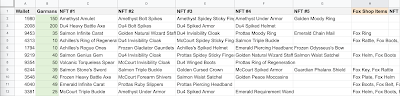
A section of the Garman Blockchain
 
To keep my 5th graders engaged at the end of the year in an ungraded Library-Technology class that meets once a week, I decided to increase the intellectual level… significantly. My co-teacher, the Librarian, shook her head and laughed when I shared that I intended to teach  10-year olds about blockchains, cryptocurrencies, and NFTs. Adults complain all the time about how they “don’t get crypto,” but these 5th graders picked it up quickly thanks to a blockchain role-playing game I created with just a google sheet and some creativity.

I knew I would never get 10-year olds to understand blockchains, cryptocurrency, and NFTs by lecturing at them, so I designed a game that runs on a homemade blockchain where students receive cryptocurrency and NFTs and can use them to succeed on class activities and assessments. Think of this as a role-playing game, where, by using their crypto and NFTs (to defeat bosses!), students come to understand this technology. In our discussions throughout the unit, students made insightful points about our homemade cryptocurrency and NFTs that applied perfectly to the debate in the tech world about the utility of blockchains. They also learned a lot about tangential topics like digital and financial literacy, intellectual property, and citizenship. Perhaps most importantly, students thought innovatively, creatively, and strategically about a new technology with the potential to change the world they will inherit.

Background
I am no crypto-evangelist. Frankly, I don’t see the practical use, and I can’t get over the environmental problems (not to mention all the scams). Regardless, blockchains are an innovative piece of technology and they’re fueling ambitious and optimistic projects that may have an impact on future technology. For example, evangelists want users to own and control their own data on a blockchain (e.g. NFTs) and they want to build new decentralized institutions (e.g. DAOs) that can check the power of the current tech monopolies. Whether or not these projects are here to stay, I want my students to 1) understand the disruptive technology that they may inherit and 2) start thinking innovatively and strategically about how they use technology in their lives. Again, I am not sold on whether and to what extent this technology will enter our lives, but there’s loads of capital and thousands of talented engineers trying to transform technology as we currently use it. It’s imperative for the next generation to understand this so they can embrace the good pieces and push back on the bad. After all, had citizens better understood the last round of companies that “disrupted” our information ecosystem–companies like Facebook/Instagram and Google/Youtube–we could have better resisted the ad-driven business model that thrives on stealing our data and feeding it into an algorithm designed to hook us by amplifying our anxiety, anger, and fear.

Blockchain
With help from a colleague, I coded a Google Sheet to function like a blockchain, and then I launched our game with a loot drop (think: opening a chest in a video game) where every student acquired currency, called Garmans (named after the Head of School), and NFTs. The NFTs were items to be used in our role-playing game (e.g. Volcanic Battle Axe). Students received a wallet number that appeared on our public ledger/blockchain. They then created “character cards” based on the items in their wallet (Garmans and NFTs). They took these "characters" on quests–creative, fun challenges in faraway lands with mythical creatures–in the hopes of winning more loot and enhancing their characters.

The Google Sheet served as our “public ledger” of all transactions on our Garman blockchain. Students could buy, sell, or trade Garmans and NFTs with a simple Google Form. Much like a real blockchain, in order for the trade to go through, a “miner” (another student), had to verify the trade. For example, if one player wanted to trade her “Salmon Spidey Sticky Fingers” to another student for his “Golden Invisibility Cloak,” they would fill out the Google Form and enter their wallet numbers. The Form was connected to our blockchain and it auto-generated an email that went to a random student in the 5th grade who had to then verify, or “mine” (a crypto term for verifying a transaction), the trade in order for that exchange to appear on our public ledger.  I incentivized “mining” the same way real cryptocurrencies do by releasing Garmans to miners that verify transactions. And I incentivized trading to acquire more Garmans and better NFTs because it helped them succeed on quests! If this sounds confusing to you, that simply highlights one of the biggest problems with crypto! People don’t get it. But I can assure you that my students figured it out quickly. Whether students were trading, mining or questing, they learned intimately how this process works. Students checked the public ledger frequently to see which wallet numbers were trading which items for how much.

After just one class, the Garman blockchain set off a wave of excitement and activity that spanned far beyond my classroom. Students raced to collect NFTs from the same “set.” They designed intricate characters with names, classes, backgrounds, and even signature outfits. And they asked dozens of questions about how this works, why, and what we can do with it.

Quests
In addition to administering a functioning blockchain, I also wanted this experiment to serve as the engine that drove my class throughout the 4th quarter. I designed a number of quests where students teamed up and used their characters to complete challenges. The first quest was essentially a creative quiz about the content we had been learning in this unit. Not only were students using our blockchain to design and modify their characters to succeed on this quest, but the questions that comprised the quest were about blockchains as well. For example, characters couldn’t get past a mythical wardrobe (and into Narnia) if they hadn’t made or verified a trade. And they couldn’t see the final boss in the mirror (from Alice in Wonderland) if they hadn’t shown creativity by writing their character’s background and by adding original work to their character card (to signify the NFTs they owned). If students succeeded, they had a chance to earn additional loot for their wallet and thus their character. Throughout the quest, I used different gamification elements to keep students engaged and challenged. One great thing about a gamified unit is students can fail at the game and learn from it without the fear of a bad grade!

The students were so engaged in the unit that they asked for more quests, more Garmans, and more NFTs. I overheard students trading Garmans for skittles at lunch. I had students emailing me throughout the day asking about a trade verification or seeking to purchase a new NFT from the Fox Shop (my storefront for selling new NFTs–also accessed via Google Sheet & Form). Though my class only met once a week, students interacted with our blockchain daily. As an educator, I harnessed this extracurricular energy, creativity, and collaboration for deeper learning. I sought other 5th grade teachers and asked them to share with me the content they were teaching. I turned this content into additional quests. Over the subsequent weeks, my Library-Tech class became a place where students completed quizzes for other courses all while learning the content and skills I set out to teach and refine at the outset of the unit–skills like creativity, collaboration, and resilience.

Examples
In the Math Menagerie, students had to apply their math skills to defeat their math teacher–an elf that lived in a tree that looked suspiciously like it came from the Keebler world. If they could calculate the perimeter of a stump, they could use it to cross a river (and they could use their NFT boots or gloves to climb or wade). In order to defend themselves from arrows coming from above, they had to know about isosceles triangles (and they could use their NFTs to return fire or heal each other if they failed the geometry questions!). And to get up into the tree, they had to know about greatest common factors. Clearly, this is a math quiz, but the students didn’t see it that way; they were questing, desperate to know what loot they could acquire upon completion.

Math Menagerie Quest Example

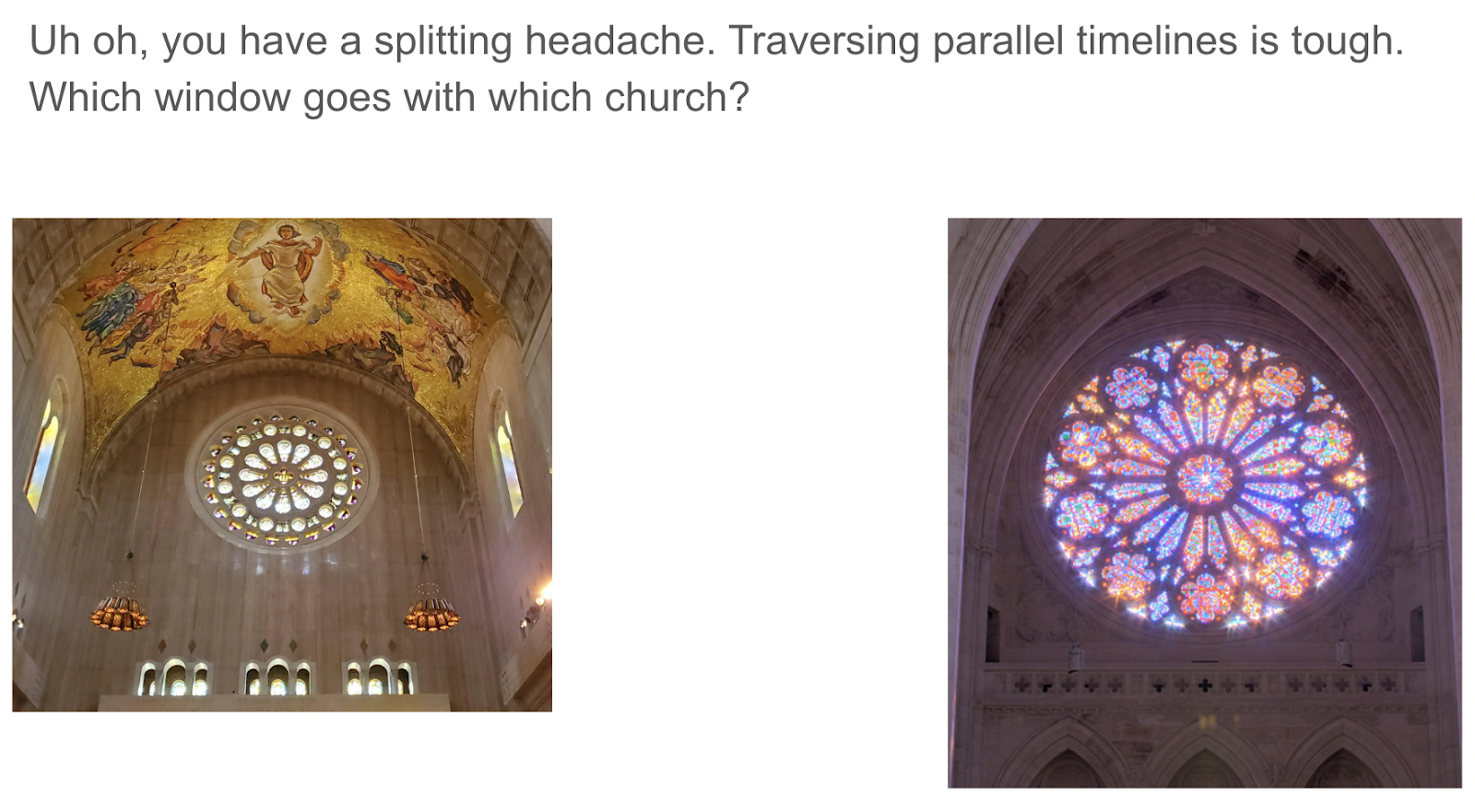
In the Church Championship, students used their knowledge of Romanesque and Gothic architecture to defeat a time-traveling cleric–their social studies teacher. If they got it wrong, they were locked in faraway churches and couldn’t help their teammates.
Church Championship Quest Example

I invited my colleagues to observe these quests, especially the ones with their class’s content. They couldn’t believe it. Students eagerly formed groups and sent their characters on quests seeking adventure and loot. It didn’t matter the subject-matter, this blockchain sustained teaching and learning for an entire grade level!

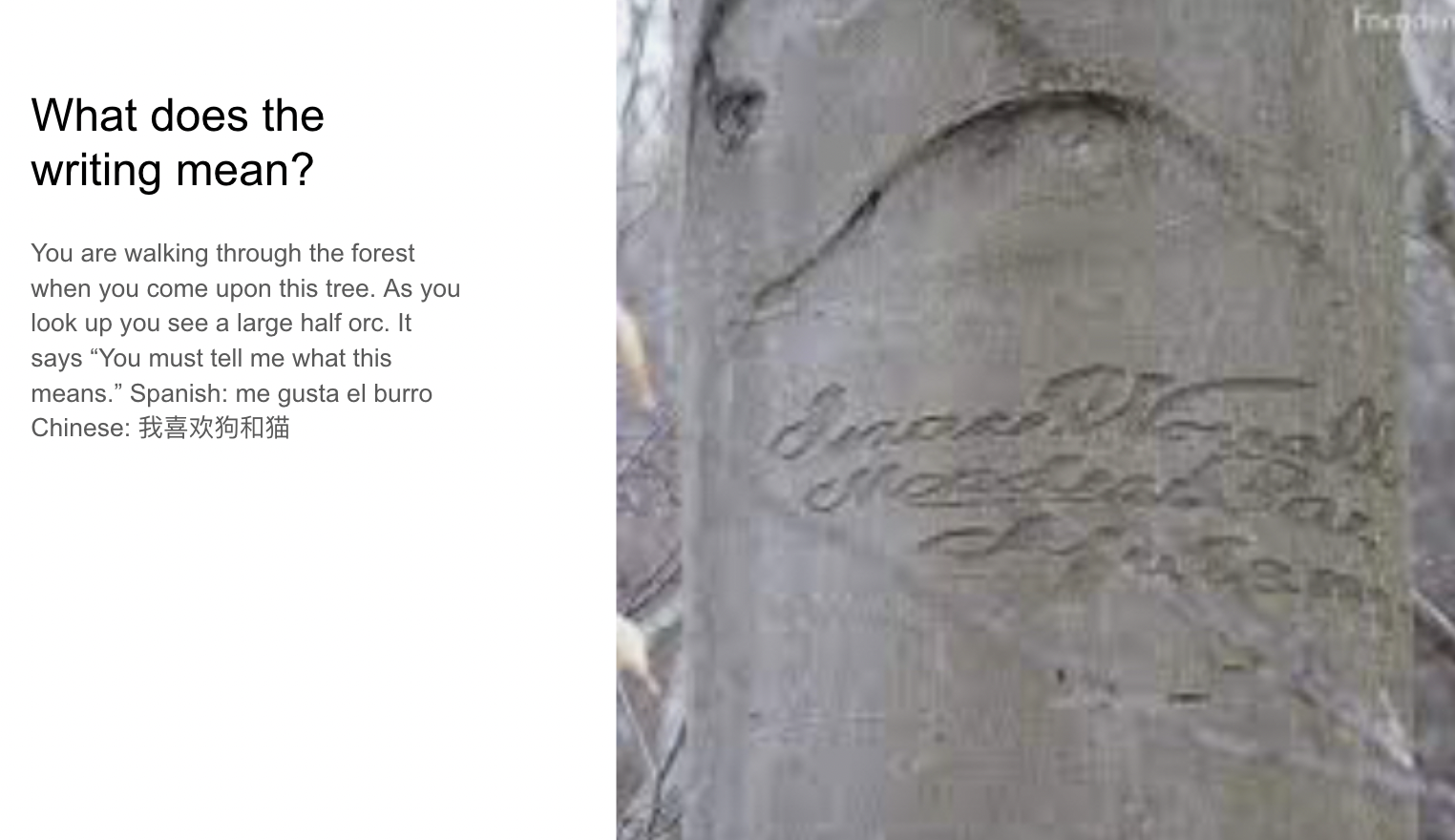
Creating these quests took skill, knowledge, and creativity, so I finished the unit by having students create their own quests about a topic they were passionate about from their 5th grade curriculum. The results were fun and exciting, but also insanely creative in a way that only 5th grade teachers will understand. They taught me new ways to use the blockchain that I created! This unit had something for all students to enjoy: teaching classmates about a passion, challenging friends with an evil (or nice!) boss, and doling out loot on the Garman blockchain. A seriously diverse group of students thrived on this project and many asked to create more!
Student Quest Example

Throughout the unit, I hosted brief discussions at the beginning of class before we started questing that encouraged students to think critically about the technology itself. The most illuminating discussion was when I asked, “what are Garmans worth?” and stepped aside. Inevitably one student would note, correctly, that this is all a simulation and Garmans weren’t worth anything. But another would point out that they were able to leverage their Garmans to get something they wanted, whether an NFT on our blockchain or Skittles on the playground. When students were waiting for trades to be verified we had a detailed conversation about bitcoin miners and the negative environmental impact of cryptocurrencies (my students were none too pleased). I also received a number of emails about a “scam” where one student took advantage of others via the trade Form. This led to a real conversation about how hackers and scammers take advantage of the anonymity of cryptocurrencies and also how they exploit the complexity of cryptocurrency and blockchains.

This game allowed students to experience sophisticated technological and economic concepts in a way that sparked engagement and provided a depth of learning that I didn’t know was possible with 5th graders.  

The game mechanics allowed students to take ownership of their learning. They felt empowered by creating and participating as unique avatars while they also felt like they were part of something joining up to defeat bosses and creatures in imaginary places! All of this was documented on a public ledger, which means that it transcended my individual classes and pervaded the whole grade. Conversation about our blockchain permeated every 5th grade classroom/teacher to the point where I had to address it at a team meeting; “if you are wondering what the Garman blockchain is, ask a 5th grader!” Students were all too happy to teach their teachers (and parents) about blockchains, cryptocurrency, and NFTs.

I challenged students with tough material–learning about blockchains, cryptocurrencies, and NFTs–while also challenging them in the individual quests in a way that would have yielded stress and frustration in a normal class with quizzes and grades. But I learned that when students engage with a simulation / gamified unit, excitement and creativity quickly replace stress and frustration.

Our blockchain was self-sustaining, holding students' attention for a full unit inside and outside my classroom. The quests proved that these game mechanics worked in all 5th grade classes, not just my own. That left me wondering… what we could have done with this blockchain if every teacher designed a unit around these game mechanics/incentive structures. That would be something!

10.21.2019

Technology and the Poisoning of the Pedagogical Well

https://unsplash.com/photos/hLZqnIz9L94
The potential that technology has to transform education is tremendous, but over a decade into its adoption, it’s still just that, potential. That’s because as more teachers and schools have deployed technology, they’ve poisoned the proverbial well--individuals and organizations have adopted technology poorly and it’s ruining technology’s promise for the rest of us.

It’s not that schools and educators aren’t trying; schools are spending a fortune on educational technology from devices to consultants to professional development, and teachers are quickly updating their lessons and practices to accommodate a technologically saturated student body. Venture capitalists, silicon valley companies, and tech billionaires are using money and influence to embed educational technology in schools. 

The reason all of these constituencies are dedicating resources to technology is because it allows access to the world’s information; as such, teachers can provide autonomy to students so they can pursue interests and expand and deepen their knowledge beyond the classroom walls. And, technology provides inexpensive, user-friendly applications so teachers can inject engagement and creativity into their classrooms. 

Imagine a student researching a topic of interest. Today, that includes access to the world’s information, and access to the world’s professionals. Google is the ultimate learning tool. Once curious and informed, students can go straight to the source by digesting the words of a professional by watching TED Talks, listening to podcasts, or reading their work online. With social media, students can do this indefinitely with the follow button. Even better, they can directly converse with a professional via email, tweet, or message. After a deep, sustained research process, students can think critically and communicate creatively with a number of free tools and professional examples. From Google, Apple, and Adobe to tablet applications and online editing tools, students have an endless suite of products available to them to create and share a masterpiece (not to mention a thousand online tutorials to help them learn how to create or edit something their heart desires). The technology described above has powered excitement in education around project-based learning, personalized learning, experiential education, gamification and many more. 

Schools and administrators quickly seize upon the successes of the individual teachers that are savvy in academic technology, and they try to push others to do the same. From schools to students to teachers, as more constituencies embrace technology and seek ambitious, positive goals, it has resulted in short-sighted, pedagogical failures. Technology’s ubiquity, has birthed bad pedagogy, which has poisoned the well for the technologically and pedagogically savvy.
 

SCHOOLS - From progress to convenience 

As schools and administrators have seen the success of technology in learning, they have pushed teachers to adopt technology for the sake of “progress” and 21st century learning. Those ambitious goals fade within a year or two, and what schools have actually come to depend on with respect to technology is convenience. When all teachers post assignments online, grade online, and communicate online, it allows a perfect paper-trail for administrators to explain problems with students and teachers alike. Administrators reference technology to talk about 21st century skills and a 21st century job market; many have adopted words like innovation, creativity, and entrepreneurial--only to force students into the same centuries-old factory model of subject-bell, subject-bell, repeat and for homework with task-submission, task-submission, repeat. When students seek autonomy and creativity elsewhere, like social media, schools are quick to play whack-a-mole hoping to limit agency and enforce conformity. Schools are decidedly not teaching digital citizenship and media literacy, thereby ensuring students are not using their devices as an extension of their intellectual and character education and are not leaving school with 21st century skills ready for a changing workforce.

STUDENTS - From learning & creativity to distraction 

If you sit in the back of a high school classroom with devices out, you will see videos, messages, and games running concurrently with classroom instruction. Our students use technology all the time; and, capitalism has driven the biggest tech companies--from social media platforms to video games to streaming services--to compete for their attention in order to sell advertising. Companies do this by traveling down the brain stem to keep our students hooked. For some teachers that celebrate the creative pursuits of their students via devices, these apps and connections can foster learning, collaboration and creativity. But to most teachers, these pursuits are a distraction from the course content. Most teachers now see open devices in class as a headache. Many aren’t allowing students to take notes on devices anymore. 

TEACHERS - From transformative learning to “package and submit”

Because teachers see many of their students as distracted, they struggle to leverage technology for depth of research, collaboration, and creativity (let alone sustained engagement). Instead, teachers are leveraging technology the way schools are, more for convenience than for progress. As such, teachers are implementing poor pedagogical techniques to meet the parameters created by schools and students around classroom technology.  

To control for the parameters placed on them, teachers have perverted technology use from autonomy, deeper learning, and communication/collaboration/creativity to a much more small classroom culture of what I call “package and submit.” In order to ensure their students are on task and using the resources that they’re supposed to, teachers ask students to use their devices for simple knowledge-based tasks and then demand to see each task (and sometimes grade it). Whether an English teacher asking students to answer questions about an author or submit reading journals or a Science teacher asking students to turn in a worksheet, a pre-lab, and a lab, tasks are small, and checkpoints are frequent. Often, students will go to Google; they use the copy and paste features on their devices in order to package information and submit it. This style of instruction is not at all innovative or creative (read: not progress), it’s just easy (read: convenient), made even easier by modern learning management systems like Google Classroom. 

Schools and administrators are totally okay with package and submit culture; in fact, they welcome it. It’s good for administrators and parents because assignments are transparent and available online. Many schools are even going to open online gradebooks. And these grades depend on whether or not a student can package and submit, which is largely objective. This has led to grade inflation, specifically for organized students (rather than inspired or intelligent students). Clearly these changes are convenient for administrators and parents, but teachers too have learned to embrace them, understanding that grading transparently and objectively is an easy way to keep administrators and parents off one’s back.

That said, administrators are trying to have it both ways by also pointing to a successful technological project to justify the widespread use of technology in school (and purchase of devices, applications, and professional development). But those successes are declining, fast. 

The methods described above that we currently use to administer technologically-driven pedagogy are simultaneously undermining it. If a teacher gives significant class or homework time for an assignment that allows autonomy and creativity, he will find that his students will spend some of that time off task, cut corners (copy/paste), and submit and forget it. That’s because that’s what all of their other teachers are requiring, and our students are being conditioned to package and submit (and they’re getting good grades!). And that’s ruining academic technology for the rest of us. Even if a couple of students did embrace autonomy, enjoy learning outside of class, and submit something truly creative and unique, the math is simple for most teachers: for what percentage of my students did this project go as planned? And how much of my course content did I forgo to create this technologically driven opportunity? These fears and the uncertain results of a unique and creative project or activity lead to a regression in digital pedagogy, a regression to convenience, to package and submit, and to transparency and objectivity. The well is poisoned.


If we truly want our students to succeed in our schools and beyond, we have to plan for autonomy and creativity and give our students time to acquire a depth of knowledge in an area of interest. Only then will students better understand themselves in digital spaces and uncover professional opportunities in digital spaces. If we don’t, more and more administrators and teachers will embrace “package and submit” (and grade) as the only way to ensure students complete an activity or project requiring technology. As this gets worse, the medium becomes the message; if computers in school becomes synonymous with Google, copy/paste, and package and submit, that will become the norm for our students not just in school, but also in the professional world. 

If we don’t fix our pedagogy, our students will still explore interests in digital spaces where they have autonomy, and creativity. They’ll just do it without our guidance and mentorship. Today’s information landscape is complex, deceptive, and even dangerous. Let’s not outsource our job as teachers to YouTube, Reddit, Netflix, or Fortnite. Unfortunately, up to this point, instead of leaning into those spaces, we’ve shut them down. 

The good news is we can solve this. After all, we made this mistake; we ruined the incentive structure for students and teachers using technology. We need to start by listening to our students, mentoring our students in digital spaces, and trusting our students when we embark on technological exercises. We must endeavor to get our entire faculty on the same pedagogical page with respect to technology. Finally, but most importantly, we have to investigate the structures that drive our schools and modify things like our schedule or our gradebooks to maximize for a new style of 21st century digital learning, one that embraces autonomy and engagement, promotes depth of research, and rewards creativity.

9.17.2019

Dear Educators: Algorithms are Radicalizing our Boys

Recently, I've seen several tweets from educators asking about how to teach internet culture, specifically how to help our boys avoid radicalization in online spaces. It's imperative that we address this in schools. As someone who has had his eye on this issue for a number of years, I'll do my best to help move the dialogue forward by presenting the problems in layman's terms.

https://www.flickr.com/photos/bryanrusch/10428426095/in/photolist-gTwpKV-843oY8-cztP7W-5CFeAz-UyFKue-KDyvRm-ocriHu-Tu2cqq-2eghqUJ-Sj5h2L-monfkU-2fmcy3v-ipE2os-22xDUrW-2ecMh5B-qVRABD-9T4j9C-2aAfRG7-STmbmm-5df2AC-7cAFq6-TieeBC-Ua7T47-fan2oV-dm4MNF-fv9Vhg-hJmtWp-5hcauP-71p7Js-eaNHJt-e1xKuo-rdfHiN-7axycj-SQKMBw-VLfZo1-9zn3qh-CdGqJU-RZ91bd-a57A44-nkiiUj-nReGM7-XooGWD-RGjv1H-GFBNVf-TcqERt-EDP3aL-Cvrep-JtZSbb-az74Zp-REoL16
First, and foremost, it's important to provide a basic understanding of how these online spaces work. The engine that drives the internet is "time on site" and the best way to increase the amount of time people spend online is to manipulate them psychologically into getting and staying online. That's why games and social media companies use variable rewards--just like slot machines--to get people online. Those rewards release dopamine, which yields clicks. To keep you "on site," tech companies mine your data so they knows who you are, what you like, and what is most likely to get you to engage. Then, they feed your data into an algorithm that manipulates you into clicking on more things you might like.

What tech companies have learned is that feeding people affirmation gets clicks, but feeding people fear and outrage yield even more clicks, shares, and engagement. That's how Twitter and Facebook juice time on site. Another successful model is to nudge users towards more and more extreme content. That's why users watch over 1 billion hours on YouTube a day. "Time on site" skyrockets when users fall down a rabbit hole of extreme content; conspiracy theories work perfectly. That's why flat earthers and anti-vaxxers have experienced a resurgence in the internet age. For more examples and a better explanation of the above, check out Guillaume Chaslot's website AlgoTransparency and listen to Zeynep Tufecki's conversation with Ezra Klein.

Yes, algorithms manipulate users to stay online and that process is self-sustaining. Becca Lewis's research on "reactionary right" video creators revealed that not only are creators radicalizing audiences, but audiences radicalize creators too. As YouTube's algorithm knows too well, users want more and more extreme content--especially people who spend a lot of time getting information on YouTube. So if a creator wants to please his audience, like the algorithm, he too has to move towards the extremes.

In the book Networked Propaganda, Harvard researchers saw this radicalizing movement happen in more traditional forms of news as well. Their research showed that Brietbart's content was further right (read: more extreme) than Fox News's content and, they were getting more clicks and more shares--especially on immigration. As a result, Fox News tacked rightward to keep up. This could only happen in an age of social media drives audiences to websites, thereby affecting their bottom line. Of course, Fox's rightward tack is partially motivated by money. Even teenagers in Macedonia realized they could make a quick buck (sometimes 3K a day!) off traffic from social media by pumping out misinformation with click-bait headlines to Trump voters. 

In 2019, Gallup reported American's trust in mass media has dropped 8 points to an all time low of 32%. Among Republicans, trust dropped 18 points to 14%. This lack of trust in the mass media is most pronounced in young people. Perhaps that's partially why 94% of 18-24 year-olds use YouTube daily (Pew) and 59% of Gen Zers cite YouTube as their preferred learning tool (Mary Meeker). Perhaps needless to say, teenagers are at the forefront of this algorithmic radicalization.

Do our boys fall down algorithmic rabbit holes of extreme content? Yes and yes. If you want to know more about how, I highly suggest this thread. Seriously, read it. What it fails to mention is where our teenage boys first find media that pushes them to believe, say or do something "edgy" or anti-pc. In my experience as an educator, that most frequently happens 1) via gaming videos on Twitch or YouTube including the corresponding comments section (and chat apps like Discord) and/or 2) via political videos or podcasts on YouTube. Both Guillaume Chaslot and the Berkman-Klein Center have shown YouTube's tendency to push users towards far-right videos and conspiracy theories. Zeynep Tufecki proved that even watching a Hillary Clinton video inspires YouTube to start recommending Trump videos and eventually far-right content. Then, as the thread above explains so well, once our boys parrot something they hear in this space and get push-back from a parent, teacher, or peer, it often pushes them further into the media diet that prompted them to say/do something inappropriate and down the rabbit holes that algorithms feed them.

For example, the most famous gaming streamer on YouTube is Pewdiepie. He recommends anti-Semitic channels and has purposely provoked critics by doing a Nazi "heil" and using Fiverr to get people to hold up an egregiously anti-Semitic sign (Vox). The way algorithms work, if Pewdiepie gets even a small percentage of his 100+ million subscribers to click on these other channels, YouTube begins to connect them and recommend these channels to Pewdiepie subscribers even if they don't take him up on his recommendations. Connecting accounts and videos like this creates the network of edgy (to say the least) content recommended to our teenagers. For older males, Joe Rogan's podcast might be the trigger that connects listeners to alt-right leaders like Alex Jones and Jordan Peterson--both guests on Rogan's show.

I assume most educators, and very few administrators, have no idea what algorithmic extremism is, let alone how it works on our students. Hopefully, this article gives us enough background to begin discussing this issue and bringing it into our curriculum. In order to address these problems, we must lead discussions with our teenagers about their media diet and it's crucial that we are informed, honest, and open. We should identify and empower student leaders who will act as upstanders in the face of the negatives in this space. Finally, we must emphasize do's over don'ts and positives over negatives in order to avoid pushing students away from us and towards internet communities that don't share our values. Obviously, this will be challenging, but we're educators, and none of us want to relinquish our responsibility to impart knowledge and values in our students to internet celebrities or to algorithms.

8.01.2019

Schools are obsessed with EdTech; Social Media must be next

https://www.flickr.com/photos/michael_hamburg/15955789117/in/photolist-qiXAdn-MQRsi2-CGw82S-jkCiMg-9biG5y-p2rUuj-bkQWJt-4HGaAR-4GgMrr-dG7pp3-TFgcDW-8US7Fp-HSQXF-LP85GV-ZF2BTh-Yd1CYV-86DmKm-baJBZz-MYNQfX-S9UfWP-h9ACkh-9Hk7dZ-5QvGcF-DkaBSx-d9KDXv-TarPzY-9MLAwC-a9hGMj-UjL7Xw-ewAY1r-cEhqbS-Tv81im-c3JNnu-eeV2C2-dAkXzS-qNXaGW-5e6KkU-QvyuYs-eCDFYD-eTffcN-NMgiPM-R74dAV-29j5G24-6MAcdJ-29hJmAG-TmFL5v-Pcc3eH-qtFAad-4z9LEf-auFVk7
Over the last decade, schools have been obsessed with purchasing and implementing educational technology, so much so, that it has created a need to incorporate new digital skills in the curriculum: media literacy, digital citizenship, and digital portfolios. In just the last few years, we've seen our students (and our society) struggle with online issues like bullying, misinformation, hyper-partisanship, and increasing stress and anxiety. But, schools cannot teach those skills or overcome those obstacles until we teach Social Media. That's because these skills and these obstacles are born out of the fact that our students are using the EdTech we celebrate to spend time on social media. Nevertheless, schools are going to great lengths to naively ignore social media entirely. It's time for our obsession with EdTech to evolve; we must embrace and teach social media.

Leveraging social media to teach digital citizenship, media literacy and digital portfolios will fundamentally change education. I use social media (Twitter, LinkedIn, newsletters, and podcasts) to become a better teacher. In that space, I've built a network of experts and professional organizations (media literacy), I've connected and collaborated with colleagues (digital citizenship), and--through this process--I've built a robust digital portfolio of my work. This should happen for all of our students in all of our classes. It's what meaningful technology integration looks like. It meets students where they are, it helps them develop and explore interests, and it teaches them skills and best practices to succeed beyond school. 

In the last decade, schools have embraced educational technology from outfitting our physical classrooms with devices, to restructuring personnel with more IT and EdTech coaches, to increasing budgets for software and consultants. We've spent a fortune on EdTech in our schools. Audrey Watters reported that in the last five years, investors have sunk over $13 billion into EdTech startups. An entire network of EdTech "thought-leaders" have gained out-sized influence on our professional learning from Twitter to conferences to consulting. And yet, outside of class, our students aren't using the EdTech software we buy, they're not employing the EdTech skills we teach, and they're not listening to the consultants we hire. They're connecting and consuming on social media.

Schools are partially responsible for our student's time online, which is over double digits (see Neilson or eMarketer). We are putting devices in their hands, giving them fast WiFi, asking them to complete homework online, and then ignoring everything else that happens in that space. Do we really think that our students are leaving our classrooms and using the cool EdTech app we taught them in English that day?

To address the rising use of social media and the problems created by social media, it seems logical that social media should get the EdTech treatment--more space, more personnel, and more money. As someone who has been participating in discussions online and speaking about teenagers and social media at schools and conferences for years, I'm always flummoxed by EdTech's omission of social media. At ISTE, one of the largest EdTech conferences in the world, "social media" appeared 5 times in the program, and some of that was to sell schools on security/privacy and mindfulness, not to use social media as a powerful tool for teaching and learning.

Currently, schools have a see no evil, hear no evil, speak no evil stance towards social media. Schools react to social media controversies with discipline rather than teaching social media proactively. Some schools attempt to block it entirely (no, it doesn't work). Imagine demanding your students enter classrooms to learn, engage civically, and collaborate professionally, but then giving up on all of that once they open up their screens. That's not good teaching.

Even schools that acknowledge social media's role in our world stop short of meaningfully integrating it into the classroom. Schools talk about digital citizenship; good schools may even discuss controversies that happened online, but we never go to the source and teach social media. That's like teaching poker without cards. The same is true of teaching around media literacy and digital portfolios. Schools show students what a good source is; good schools may even teach them how to fact-check something, but we ignore student's social media diets entirely, which could be littered with terrible sources and bad role models. That's like playing a poker hand without looking at your cards. Finally, schools ask students to complete amazing projects; good schools may even aggregate great work and put it into a school-issued template or event, but we never help them construct and manage a public digital portfolio that could open doors for them in college and beyond. That's like having a royal flush and folding it.

To teach digital citizenship, a classroom teacher might ask a student, "should you share ____?" That student is savvy enough and a strong enough critical thinker to deliver a smart, nuanced answer. The same is true of media literacy and digital portfolios--"is ____ a good source?" and "what would a potential employer think about ____?" I've seen my students get these questions right time and again. And yet, those same students, get these questions wrong all the time outside of this classroom exercise (frankly, so do adults). That's because digital citizenship, media literacy, and digital portfolios have to be lived. And only when we bring social media into our schools, can we truly help our students live these skills everyday.
"Anyone who thinks they're doing a digital citizenship curriculum--if you're not using social media, if you're not talking about social media, you're not getting through to your kids." -ISTE19
For every time that ignoring social media has provided a school plausible deniability for an online controversy, there are a dozen more times when that same school could have identified a problem early and created a teachable moment. That alone should convince schools to embrace social media. More importantly, social media spaces have become the de facto authentic audience for our students. That's the new student center where discussions occur, that's where students share talents, and that's where students work collaboratively. Schools will benefit from acknowledging this fact, discussing the impact of it, and teaching students to use the space intelligently and thoughtfully. Finally, and most importantly, we're forgoing the opportunity to prepare our students for the world they will inherit beyond school--one that depends on professional learning and collaboration, networking, and career advancement, all of which should be happening on social media.

Whether social media gets the EdTech treatment or not, we must acknowledge its impact and bring it into our classrooms as soon as possible. Graduating lifelong learners and good citizens requires us to teach digital citizenship, media literacy, and digital portfolios. We can only do that successfully if we integrate social media into our curriculum and our communities. At the least, teachers can show students how they learn online, where they get information for class, and how they collaborate with other professionals. Teachers can include an auxiliary reading list of social media accounts for interested students. Teachers can create opportunities for students to collaborate with professionals online. And, teachers can ask students to contribute quality work to a digital portfolio. I'm not holding my breath for schools, investors, and consultants to embrace this pivotal part of our student's lives and our society and neither should you.

5.29.2019

Teaching Media Literacy Through Social Media

This article appeared on KQED's In the Classroom blog in February!

In 2015, Wes signed up for my Mass Media course, hoping to learn about journalism, broadcasting, graphic design and film. He discovered a passion for film and graphic design and he quickly rebuilt his Twitter to follow writers, directors, producers and filmmakers. This feed provided more films to watch, more critics to read and more directors to emulate, which in turn inspired him to start experimenting with iMovie and Photoshop, and later Premier and After Effects, in order to create and share his own films and designs. At the end of the course, I asked students to upload their favorite projects to a digital portfolio. To this day, Wes still updates his digital portfolio!

In talking to Wes recently, he mentioned how important reforming his social media feeds was in helping him realize and pursue his passions. On many of his accounts, he stopped following “friends” and began learning, critiquing, emulating and collaborating. At first, he blogged about horror films on Tumblr, then he produced his own film reviews on YouTube, and now he’s analyzing and critiquing films on Letterboxd with other film buffs. Wes said he felt fulfillment when he applied for a job and the interviewer had seen his work online!

If you’re like me, you get frustrated that despite our best efforts, students continue to encounter and share misinformation, use poor sources on assignments and post inappropriately on social media. Over many conversations with students, I realized I’m struggling with this because I’m trying to teach media literacy skills in a “lab” environment with artificial conditions. There's a big difference in showing something to a student and saying "Is this a good source?" or "Should you post this?" and actually having students regularly ask those kinds of questions in the course of their own social media networks. To address this, I decided to build instruction around student interests so that students can interact with media in a network that matters to them. I thought that if students started from a place of genuine interest, they would be more likely to consume and create media intentionally and skillfully. And this learning will have “real-world” impact for them. I’ve been experimenting with this instruction for several years in my my history classes, my media classes, and now in my social media elective. Here’s how I did it.

Consuming Quality Content
Building a personal learning network starts with social media. First, I work to pique students’ interest in a topic, then help them connect with professionals and organizations that are producing quality content about that topic on social media. One tool I use repeatedly is the “list” function on Twitter, which allows me to curate a collection of public figures and organizations that my students can follow. Here’s an example of a list focused on journalism and current events for students in my Mass Media class, and here’s an example for my Contemporary World History students to keep up with global news and developments. I built a website for students to build their own personalized learning networks for interests that span beyond the content of my course.

In addition to following these lists, students work to build their own. One student emailed me after class to tell me that on her school account, "I only follow newsworthy feeds... about human rights, international news or politics.” Perhaps the best thing about helping students build their network is that the learning continues every time they open their social media apps. A number of my students continue to check the international news list from our class two years after the course.

Producing Quality Content
Locating and consuming quality content is just the beginning of creating and joining a personal learning network. We also need to empower our students to produce quality content to inform these networks. For example, I hosted a class blog, YouTube, Instagram, Twitter or Soundcloud account where students share articles, podcasts and videos. Producing content for these shared accounts can be a jumping off point for contributing to students’ own personal networks. For instance, here’s an example of a student who chose to repost her work onto her own digital portfolio.

When assigning media creation, I embrace student choice. In my social media elective, I ask students to demonstrate progression through the course skills chart (image below). They can do so in any medium. A student can write (like this student who wrote well-researched social justice posts); record a podcast (like these students who wanted to help their peers understand climate change); or even create a model (like this student who wants to be an architect). When evaluating, I look for argument, evidence and some fluency (and creativity!) in the medium they choose.

In the same way that consuming quality content becomes self-sustaining, this effort to create also becomes self-sustaining. As a teacher, I work to help students create and share their first piece of original, informative media. Over time, I can step aside and let them develop proficiency in their mediums as they work to improve their networks, which is essential. Because it’s not enough to learn online, one has to be understood as such, and the only way to do this is to contribute thoughtfully. Ideally, each student’s network will act as an authentic audience that gives feedback. At the least, the professionals and organizations in the student’s network can serve as role models to emulate when it comes learning and sharing online.


In order to graduate media literate students, let’s allow them to follow their interests online. That way they experience online spaces with the interest, critical eye and collaborative mentality of a responsible digital citizen. Savvy media consumers build large networks of professionals and organizations that deliver quality content. Skilled media producers contribute meaningfully to that network, emulating professionals and creatively including their voice. We can mentor our students through this growth and watch them as their participation in networks launch academic, civic and professional opportunities delivering fulfillment to their lives.

12.21.2018

Upgrade Your Syllabus: Social Media is the Greatest Tool for Cultivating Lifelong Learners

The best educators cultivate intellectually curious lifelong learners. They instill in their students a love for their subject matter that extends outside the classroom and beyond the length of the course. The tool that best supports this endeavor is social media. Every teacher should create and share a network of social media accounts that help students learn more about the course content and stay abreast of new developments in the field. Ideally, this network provides a place for passionate students to continue learning, to contribute their own work, and to connect with experts and professional organizations well after the course concludes.

Currently, the best-case scenario for an inquisitive, tenacious student who enjoys a particular course is to consume any "additional readings" on the syllabus and connect with the instructor for more. Perhaps that connection results in a decision to take another course, to engage in independent study or a research project, and, at best, to publish work with the instructor. But how many of our students continue to learn about a topic when the course ends? And for how long?

In order to reach more students and help them engage with a subject or employ a skill beyond class, educators from high school and up must leverage social media. On social media, experts in every industry, from professors and researchers to practitioners and politicians, discuss and debate successes and controversies. And perhaps the greatest thing about social media is that students (read: amateurs) can also contribute to these discussions and collaborate with these practitioners. Students can thereby apply their knowledge and continue to learn in this space indefinitely.

Any social network like Twitter, YouTube, Podcasts, Instagram, or Pinterest can help a student learn more about her topic of interest, but these platforms’ unique media make them particularly well-suited to certain topics. For example, a math student in a high school class or even a 300-level data analytics course can continue learning her topic by following influential organizations and thinkers on Twitter, like: FiveThirtyEight, Data & Society, Pew, IBM analytics, Vala Afshar, Max Roser, Nathan Yau, Kirk Borne and Randy Olsen. A student interested in film could learn from YouTube accounts like: SundanceTV, FilmBuff, CinemaSins, Every Frame a Painting, Chris Stuckmann, Alice Malone, and Jeremy Jahns. And a photography student will find inspiration through following Instagram accounts like: US Interior, Vitaliy Raskalov, Elena Kalis, Vadim Makhorov, or Humza Deas.

Most educators have already built a personal learning network that includes educators who cover similar topics and industry-level experts who are building and acting upon that knowledge. But every educator should go beyond this and build a social media network into their syllabi. Teachers should start by hyperlinking the digital resources they use to learn. Next, they should hyperlink all the authors of the course texts (and the organizations they represent). Then, they should add resources from tangential industries and topics. For example, a moral philosophy instructor could add criminal justice reform organizations and experts (like the Marshall Project and Ta-Nehisi Coates) Finally, teachers should connect students to other educators and students studying and publishing similar work. It’s important to note that this network will evolve as the course progresses.

Integrating these networks into the coursework will increase engagement and help students see real-world connections to the course content. Students will enter class informed about current events and developments in the subject matter, which will improve discussions and projects. It will help students specialize--or add depth to--an area of interest or passion and might even lead to their exploring tangential interest on or offline. For example, a science student might listen to a The Minute Earth podcast that opens doors to an interest in biodiversity. Or an art student could be inspired by the PhilaMuseum Instagram to study repatriation.

Not only does this style of instruction promote auxiliary learning and improve classroom discussion and projects, but it also creates a space for professional networking and the opportunity to publish for a wider, more authentic audience. After building a social media network into a course, educators should design activities and projects that require students to share their work online and collaborate with an expert in the field. Having students publish their work to an authentic audience of professionals with similar interests will push students to produce their best work, and it will also give them a chance to get quality feedback. Exposing students to networks of professionals working on common causes gives students a sense of what they can do beyond school. In both of these endeavors, students get to interact with experts and organizations in an area of interest to them. These publications and interactions create positive digital portfolios for students that will benefit them well beyond their time in school.

Though less visible and tangible, another major benefit of social media instruction is that it teaches digital citizenship and media literacy in a time when students are posting inappropriate, admission rescinding, employment terminating content and reading and sharing misinformation and propaganda. Schools can't expect to fix this societal issue without integrating it purposefully into the current curriculum. With the instruction described above, students are introduced to a professional network, which inevitably reduces the chances they post something they would regret or share inaccurate information.

When used purposefully, social media will open doors for our students. As educators, we need to lead in this area by building social media networks and mentoring students in that space. Our efforts will allow our students to pursue passions, network with professionals, and make an impact beyond the confines of our class or campus. Soon enough, our students will be tagging us on social media as mentors that steered them into the right network and the right field. And that's when we’ll know that we fulfilled our goal of graduating intellectually curious lifelong learners.

11.16.2018

The School Community as Authentic Audience is Disappearing

Over the last few years I've noticed a relatively significant drop in student interest and initiative surrounding school-sanctioned creative outlets and activities. For example, our school newspaper and yearbook are struggling to stay afloat, students don't present audio or video productions to a school-wide audience, and even our "open mic"--one of the school's most popular programs--has become basic and predictable. That said, our students are not any less creative or active, it's just that they now have new resources to explore their creative passions via powerful applications and the internet, and they have an authentic audience much larger than our school community via social media. With these preconditions, how do schools recapture student creativity, interest, and initiative to help build positive school culture?

When I was in high school, lots of creative and committed students joined the newspaper to physically publish a newspaper bi-weekly (every school I've been at since struggles to put out a paper each quarter). These students, from editors to writers to photographers to layout editors depended on the school's resources to print the paper. This group physically distributed the paper to the entire community. It built a positive community culture; it inspired students to write, to ask for an interview, to submit a photo, etc.

Nowadays, in the age of social media, photographers and writers alike have found authentic audiences outside of school. Photographers create VSCO or Flickr accounts and share their work online. Writers find communities of like-minded individuals to write for, whether that's a Reddit page or a Harry Potter fan fiction blog. At my school, we had three talented school newspaper writers who decided to start their own blog to write their own articles for their own audience outside of school. It proved to be an amazing resource, one that could have benefitted our school community, but enriched only those who knew where to look.

When I was in high school, I remember looking forward to the pep rally pump up video. Video production used to be really challenging and projects couldn't be posted online easily for all to see. Students had to be at Town Meeting for the screening to see it. I remember these videos to this day. They built school spirit and common culture giving us all something to root for throughout rivalry weekend.

Nowadays, every varsity athletic team records every game. And film platforms have editing options for athletes to cut their own highlights. As a result, we don't have any highlight videos to play in front of the whole community. But students have countless chances to see all the big plays in every game because their peers post them online. Some of these film sites provide unique editing tools too. I'm genuinely impressed with what my students make (free or charge), and what they share with a gigantic audience from friends to college coaches, to players around the league. At the same time, I wish it resulted in some kind of school spirit building production for the whole community.

When I was in high school, I worked to procure time during Town Meetings to engage in creative shenanigans for a laugh, for an increase in student morale, and for shared experiences for the student body. For example, I planned a spoof to a popular music video, I organized a game of musical chairs, and I participated in our SNL spoof called "Tuesday Morning Live." As a teacher, I have seen some of this--it alternates between being amazing and cringe-worthy--but it's not nearly as frequent, unique or as bold. It's often an add-on to something that already exists online, and it often suffers from the fear of being recorded, posted, and excoriated after the fact--a natural deterrent to creative, outside-the-box ideas.

Nowadays, with things like Wordpress, Weebly, YouTube, SoundCloud, and even Twitch, students have opportunities to share their passions and creativity to specialized, yet massive, audiences. I had a student that started a political blog via Wordpress, I had a student who started vlogging about local events via YouTube, I had a student who started a rap career on Soundcloud, and most recently, I had a student begin streaming his video game sessions. I'm super impressed with their initiative and effort, but I'm sad that these endeavors exist outside of our school culture.

In all of the scenarios above, students today easily create, brand, and publish content for free. And they are able to share their work with a much wider audience than just their peers at school.

This shift has occurred in the last five years; it coincides with the moment when our students started accumulating more online "friends" or "followers" on their favorite social media platforms than we have students in the school. Social media provides the opportunity for something to go viral. My students know the major events and controversies at surrounding schools thanks to social media. So if a student wanted to show off a creative work or talent, it makes sense that he or she would rather publish it through social media than through school.

To prove my point, I'd like to incorporate a case study from a summer school at which I taught a class called Mass Media. The school brings students from all across the state of NH together onto a boarding school campus for six-weeks. In Mass Media, we kept the campus news via Instagram, Twitter, Snapchat, and Blogger. Since students didn't follow or interact with each other online before this program, they relied on our platform to move their messages and ideas. Students genuinely wanted to show off the amazing work they were doing and they wanted to see what other students and classes are up to. In addition, the program hosted "coffee houses" where students shared prose, poetry, and music, and two talent shows. These were incredibly well attended and loved by the entire campus, students, teachers, interns, house supervisors, and administrators. This case study proves that when students aren't connected via social media, they are so much more likely to engage in community events and distribute content through community channels. And initiative, creativity, excitement, and positive engagement pervades this community in only six week!

So what has happened to our school culture in an age of free production and consumption of media thanks to big technology companies and a specialized, larger audience thanks to social media?

I don't think it's far-fetched to say that there are two cultures at our schools, what happens in a school setting, and what happens online. Many schools and administrators like to keep it that way. That's because when information comes from social media culture to the school culture, it often results in disciplinary action. And that's too bad, because there's also unique, humorous, skillful multimedia work being shared online by our students that is lost on us adults and removed from the school zeitgeist.

As a result of this shift in creation and consumption among our students, schools are losing the eclectic, fun experiences that bond campuses together. Every school needs morale, spirit, and creativity in order to carry out a mission or curriculum. After all, we get more out of our students when they're in a positive social-emotional state when they enter our schools and our classes.

Unfortunately, our extracurricular that depend on extracurricular interest and initiative are declining. This is coming at a time when schools are talking incessantly about 21st century skills, two of those being creativity and multimedia creation.

How are we going to empower (and critique!) our talented, hard-working students who are trying new things online? How are we going to encourage them to bring their work back into the school community? How are we going to revive our declining institutions and breathe into them energy, creativity, interest? And how do we do this when students purposely keep adults out of their social media spaces?

I have some ideas that I'll include in a follow-up post, but all of them start with talking to students. So let's all agree to start there.

11.11.2018

Mindfulness in Technologically Saturated Schools

Mindfulness and 1:1 programs are two emerging educational trends that don't play well together.

Mindfulness is about clearing one's brain and being fully present in the moment. Our school has been pushing mindfulness hard for the last four years. Teachers are encouraged to use it in the classroom, the faculty practices it before division meetings, the school practices it before town meetings. We hope that it helps eliminate distraction, reduces stress, and enhances brain function. As a school, we acknowledge the problems of information overload, we understand that students' social standing is at risk 24/7/365 on social media, and we believe the studies that warn of the increase in stress and anxiety in teenagers. So, as teachers, we try to help them clear their brains and be fully present in our classrooms.

But what happens when after a mindful moment, a student opens his or her computer to all of the things that made his or her mind cluttered in the first place? How do we as teachers reconcile the use of technology in our schools with our desire to foster a mindful environment? 

Our school isn't the only school rushing towards mindfulness instruction; schools all around the country have embraced mindfulness practice at an astonishing pace. Silicon Valley is the only industry outpacing schools in implementing mindfulness training. There's a reason for this. Both schools and tech companies are inundated with tech and both see the negatives associated with widespread technology adoption on a daily basis. Schools see this first-hand, because we witness how technology manipulates the under-developed brains of our students. And Silicon Valley sees this first hand, because they are the only ones who truly know how their code and algorithms work; their embrace of mindfulness is a tacit admission that tech manipulates us. Like teachers in their classrooms, employees of Silicon Valley want to regain control over their cognitive functions, not to mention their social relationships.

Tech employees famously don't let their children use technology. Nevertheless, Silicon Valley pumps devices into schools at a stunning clip. Apple created the "Apple Distinguished School" model to convince schools to go 1:1, and now 2:1, with Apple products. Google released a super-cheap computer, the Chromebook, so schools can go 1:1 with a lower cost. Schools have to assume that companies like Apple and Google will continue to push schools to adopt new tech to improve their bottom line now, while also hoping to hook children on their products to improve their bottom line in the future. This problem is only going to get worse. For example, my school just adopted a 2:1 model with our Middle School. Students have an iPad and Macbook, not to mention their parent-provided smartphones.

In too many industries, tech is seen as a silver bullet that can fix (or improve) something--in schools' case, teaching and learning. We tell our parents that the tech enhances our classroom instruction and improves our assessments. We say that we will be using computers for collaboration and multimedia creation. But how many of our teachers have truly redefined their classrooms with technology in a significant way? And what percentage of our students' time on their computers is spent collaborating on multimedia projects? 5%?

It would be great to see Silicon Valley, schools, and parents push back against tech in favor of encouraging experiences, relationships, and conversation. However, in the short term, tech use is only increasing in schools, so schools like mine are working to mitigate the negative impacts of tech with mindfulness. What I've noticed in my time as a teacher and an Instructional Coach is that no matter how hard we try to promote mindfulness, once a student opens his computer, there's no telling where his mind will wander, and what emotions and needs will creep into his head. For example, if a math teacher begins with mindfulness, but a student then opens his computer to see his Hudl page (sports film page), he starts thinking about, and maybe watching, a game. Or if a student clears her brain before an English class only to open her computer to see her grades (yes, we have an open gradebook), then she gets distracted and stressed. Finally, if a science teachers engages the class with an interesting demo only to have a student open her computer and get lost in the most recent controversial Instagram post, how successful is the mindfulness?

So what does mindfulness look like in a 1:1 classroom?

How to practice mindfulness is up to each individual teacher. but there are some things that each teacher should consider regarding tech's role in negating the impact of said practice. First, teachers need to make class tech rules clear. Second, teachers need to make sure that they provide the time needed for tech mindfulness to occur. Trust me, fewer minutes of focused students is much better than the alternative. Third, teachers need to find the energy and grit to enforce the rules and make time for mindfulness. Fourth, it's important for teachers to practice what they preach. Teachers should show students how mindfulness helps them with their technology use. Finally--perhaps most importantly--teachers have to explain the science of how mindfulness works and how technology can hinder this work.

Class Tech Rules
  • No cell phone at all, computers only when I say so. Only one app at a time on a computer unless I say so. That one app should be in full screen.
  • I will tell you at the beginning of class what you will need on your computer (if anything). 
Tech Mindfulness Activity

Self Check
  • How am I feeling today - happy, excited, tired, bored, etc.? How challenging will it be for me to be fully present, engaged and focused today? Prepare to succeed.
  • What was the last thing I was working on in the hallways or in my last class? Is there something looming that I feel like I should be doing? Put it aside for the class. Note: this step depends on your sense of your students. After all, it could backfire if it reminds students of something they should be worrying about.
  • What will it look like for me to be fully present, engaged and focused in class today? Envision it.
  • When I check in with myself at the end of class, how will I know if I have succeeded in being fully present, engaged and focused in class today? 
Tech Check
  • Hardware: desktops, tabs, apps, battery. Software: anything that could ping me -- text, social media, email, etc. Eliminate everything I don't need for class.
  • Take what I will need for class and make it full screen.

Exit Ticket Mindfulness
  • Did we fulfill our goal and the class goals regarding staying fully present, engaged and focused
  • Did I get distracted? How so, and how can I avoid this next class? 
  • If I'm having a hard time with this, I should see my teacher (or a school counselor) 

Tech Terms and Apps to Reduce Tech Distractions

  • Terms
    • Full screen - when an app is in full screen users can't see their dock or their task bar, which eliminates distractions. Exiting full screen requires an additional click to navigate away. Full screen also keeps a user locked in one desktop, which prevents task switching.
    • Task switching - students (and adults) switch tasks frequently on phones and computers. This decreases performance on all tasks, and it takes a long time to get refocused on the original task. 
  • Apps
    • Session Buddy - this chrome extension allows you to save all your tabs so you can come back to them later. This allows students to close all their tabs, but not lose their work.

11.06.2018

Inequality and the Internet

Last week, I spoke at OESIS Boston about how the internet has not lived up to its promise of creating a decentralized, free & open, and democratizing force in society. The presentation highlights the importance of teaching ethics, empathy, and critical thinking in our 1:1 schools and in our rapidly growing STEM curricula. The talk concludes with a look at a course I'm teaching that investigates the internet and new technology from a humanities lens. After all, we need to graduate informed digital citizens to help us stem the rapid growth of inequality facilitated by the internet and new technology. Watch it here!

10.15.2018

NBOA Feature, "EdTech's Classroom Payoff"

Last month, I was featured in the September/October issue of the NBOA Net Assets magazine about educational technology in independent schools. It's encouraging to know that a number of organizations are interested in how to integrate technology into the classroom successfully. In this interview, I talked at length about my course, "Passion-Based Learning through Social Media," and what I've done as a Technology Integration Specialist at Flint Hill--specifically the Tech Deputy program I launched with my colleague a few years back. Here is a screenshot of a part of the article; unfortunately, it's behind a paywall so you can't read the whole thing.

7.03.2018

Is #HigherEd Leading the #EdReform Movement?

No. But some institutions like Stanford's d.school are trying. Last month, they released an article detailing some of their new programs called "Exploring provocative ideas for undergraduate education at Stanford." I was excited to see such progressive proposals (see below). However, until Stanford starts accepting undergraduates who exhibit these skills, high schools will continue to push AP-heavy schedules and SAT scores.
Though I didn't use the same language, I designed my elective called Passion-Based Learning thru Social Media to fulfill all of these educational trends. Embedded below is an explanation of that course and how I got there.

It predicted and embraced all of Stanford's "provocative ideas about learning" by asking students to holistically investigate a topic of their choosing. 1) "open loop" - the course helps students create personalized learning networks and digital portfolios. Naturally, their learning expands beyond the confines of the classroom and the semester. 2) Paced education - the course is entirely personalized since students choose their own content. 3) The "axis flip" - I run the entire course based off of a skill progression that I designed (see image at 14:55 in the video above). 4) Purpose learning - Students carefully construct their own brand. They write a mission in their "about me" page on their digital portfolio.

It took me several years to convince my school to offer an elective that encompasses the pedagogy that Stanford wrote to "[reimagine] the undergraduate experience of the future." Interestingly, one of the hardest groups to get on board was college counseling, because they didn't know how this course would look on a transcript. Now that the course exists, ironically, the top students at my school don't take the elective because it doesn't say AP in front of it; if they want to get in to Stanford--to experience the innovative program described above--they need to show rigor on their transcript.

I hope Stanford (beyond just d.school) leans in to some of these progressive pedagogical trends, but I also hope they will start to select students who have experience succeeding in this type of learning environment. Nevertheless, there's a long way to go before high schools and colleges close that gap. One way Stanford can help high schools prepare students for the future of learning they describe is to be more deliberate about how they plan to model this learning so that other schools can emulate their work. They should also begin to establish partnerships with high schools, colleges, and grad schools that are implementing these new trends.

When I tweeted this article out to encourage more schools to embrace this style of learning, I heard from a fellow high school teacher (@gedwards30) wondering the same thing: how will this look at Stanford in practice? So here are our lingering questions from that thread and an ensuing email exchange. I trust Stanford's d.school answering these questions will help push these educational reforms to other schools and classrooms.
  • How does this learning fit in with Stanford's overarching institutional mission & how do staffing/cohort size/personal attention play into the program’s ability to scaffold and evaluate student progress?
  • How will instructors evaluate this style of continuous learning focused on skill competencies?
  • Is the final a digital portfolio? A capstone project? A thesis? A culminating experiment?
  • How will instructors provide guidance in student inquiry and structured evaluation of student progress to empower this style of learning? 
  • How do administrators allow teachers the freedom to impart their wisdom while also adhering to pedagogical best practices?
  • How do teachers allow students the freedom to refine or change their "mission" or stated objective(s)?
  • Might Stanford's initiative (and others like it) lead to an educational experience that functions more like a membership/subscription model rather than traditional schooling?
Educators, please add additional questions in comments or on the Twitter thread!